Why are BMIs useful ?
Why are BMIs useful?
BMI is a BMI measures an easy and inexpensive screening tool utilized to determine the possibility of concerns with weight in adults and children. An BMI measurement can be beneficial in determining whether someone requires further tests to identify health risks such as heart disease. Risky individuals will require more assessment. Evaluations could include skin fold thickness test along with diet, physical activity level, family history and other screenings for health that are appropriate.
Make your appointments for health on the internet
Find and book instantly your next appointment for health with HealthEngine
Find health practitioners
Risks related to BMIs that are extreme
 Being obese (with an BMI that is 25 or higher) or underweight (with a BMI less than 18.5) could affect your health.
Overweight
Individuals who are overweight or obese are more at risk of getting sick than those who are in those who are in the normal weight range. The risk of getting sick increases when you increase your BMI. The people who are classified as overweight (BMI 25-29.9) could also be considered to be pre-obese, and are at greater risk of health problems. In the category 1 of obesity (BMI 30-34.9) there is a moderate chance of developing disease. This risk increases to severe and severe risks at stages 2 of obesity (BMI 35-39.9) in 3 (BMI > 40) respectively.
It is important to realize that BMI does not define risk on its own. Other aspects like what one eats, the amount they exercise, and whether or not they have any disease history in their family may also impact an individual's risk of disease. But as a group, overweight and obese individuals have a higher risk of numerous diseases.
They are at risk of a high possibility of:
- Type 2 Diabetes;
- Gall bladder disease
- Hypertension;
- Dyslipidaemia;
- Insulin Resistance;
- Atherosclerosis;
- Sleep apnoea;
- Breathlessness
- Asthma;
- Social isolation and depression;
- A lack of sleep and fatigue during the day.
They have a moderately elevated risk of:
- Cardiovascular disorders (i.e. stroke, heart attack);
- Gout /hyperuricaemia;
- Osteoarthritis;
- Respiratory disease;
- Hernia;
- Psychological problems.
They may be at risk of: risk of:
- Different types of cancer (breast colon, endometrial and breast cancers);
- Reproductive anomalies;
- The impaired fertility
- Polycystic Ovarian Syndrome;
- Skin complications;
- Cataract;
- Varicose veins;
- Musculoskeletal issues;
- Bad back
- Stress incontinence;
- Oedema/cellulitis.
Underweight
People who are overweight may be malnourished. Additionally, they may be at an increased risk of developing health issues including:
- Imperfection in the immune system and increased susceptibility to infections
- Anaemia;
- Osteoporosis;
- Menstrual irregularities;
- Unhealthy fertility.
What is the limit of the BMI?
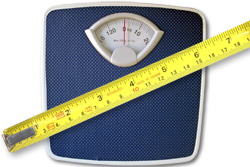 Limitations associated with the BMI are:
- BMI is different by age, race and sex. Thus, one's BMI cannot be compared to those of the same sex, race, and age.
- BMI doesn't distinguish between fat and muscle, and will therefore underestimate in certain cases and overestimate in others (e.g. An athlete might have a high BMI because of greater amount of muscle instead of fat).
- Older or disabled people are less muscular and consequently, will have the lowest BMI. It does not mean that they are overweight or that they are overweight.
- Women who are pregnant may also have a higher BMI due to weight gain that is associated with pregnancy, however, this is not necessarily due a rise in fat. BMI will overestimate the amount of fat in the body in this scenario. Pregnancy BMI and weight increase during pregnancy should be used to evaluate an individual's weight, as well as the necessity for nutritional and exercise interventions.
- BMI does not differentiate between body fat distribution. The fat at the waist ("apple" appearance) is more dangerous than hips ("pear" body shape) however this is not considered in the BMI.
Talk to your physician about other physical measures that could be required along with BMI to determine the health risks caused by obesity.
Other ways to measure overweight
Table 2: Other measures of obesity
| Measure | Description |
|---|---|
| Waist circumference | Waist circumference (WC) is a reliable indicator of abdominal fat and can be used to indicate the risk of health problems. It is determined by placing an untight tape measure at the narrowest area of your waist. You can do this with lightly or without clothing.For males:> 94 centimeters (37 inch) higher risk> 102 cm (40 inch) Significantly increased risk women: > 80 cm ( 31 inches) - increased risk> 88 cm (35 inch) Risk is significantly increased is also dependent on the ethnicity of the person and their health risk is higher when you have a lower WC in certain ethnic groups like Aboriginal, Pacific Islander, South Asian, Chinese and Japanese populations. |
| The hip circumference | The hip circumference (HC) is determined by placing a piece of tape over the widest portion of your hip area over only a small amount of clothing. HC isn't a good indicator in its own right; generally it is used in a ratio with WC as previously mentioned. |
| Ratio of waist-hip | Waist to hip ratio (WHR) is the ratio of your waist circumference to your hip circumference. The normal WHR for females is about 0.80 and for males it is 0.95. |
| Waist-height ratio | Waist to height ratio refers to the proportion of your waist circumference to height. |
More details
| For more information about nutrition, including information on the types of food and their composition in relation to nutrition and people with health issues and diets, as well as recipes and diets along with helpful videos and tools to help you, check out Nutrition. |
| For more information about problems with obesity and other health issues as well as social, and methods for losing weight, and a variety of useful tools, visit How to Lose Weight. |
References
- National Health and Medical Research Council. Clinical Management Guidelines for the Management of overweight and obesity in children, adolescents, and adults in Australia. 2013. [cited 14 April 2014]. Available from [URL Link[URL Link]
- Centre for Disease Control and Prevention. About BMI for Adults. 2011. [cited April 14th, 2014.] Available at: URL Link]
- Keys A, Findanza F, KarvonenMJ, et al. Weight-related indicators and overweight. J Chron Dis. 1972; 25: 329-43. [Abstract]
- Goh LGH, Dhaliwal SS, Welborn TA, et al. Anthropometric assessments of general and central obesity and the prediction of cardiovascular disease risk in women: a cross-sectional research study. BMJ Open. 2014: 4; e004138 doi:10.1136/bmjopen-2013-004138 [Full Text]
- Snijder MB, van Dam RM, Visser M, Seidell JC. What body fat-related aspects are most dangerous? How do we assess them? Int. J. Epidemiol. 2006;35(1):83-92. [Full Text]
- Gill T, Chittleborough C, Taylor A, Ruffin R, Wilson D. Body mass index the waist hip ratio as well as waist circumference the three indicate the degree of obesity. Int J Public Health. 2003;48(3):191-200. [Full Text]
- Pouliot Mouliot Despers J, Lemieux S, Moorjan S. Waist circumference and abdominal sagital diameter: the most simple anthropometric indicators for the abdominal visceral adipose tissues accumulation and the associated cardiovascular risk for men and women. Am J Cardiol. 1994; 73(7): 460-8. [Abstract]
- Schneider J, Glaesmer H, etal. Accuracy of anthropometric indicators of overweight to predict cardiovascular risk. J Clin Endocrinol. 2007; 92(2): 589-594. 2005; 92(2): 589-594. Full text]
- Kunesova M, Hainer V, Hergetova H, Zak A. Simple anthropometric measurements in relation to the body's fat mass, visceral adipose tissues and atherogenesis risk factors. SB Lek. 1995; 96(3): 257-67. [Abstract]
- Seidell JJ, Perusse L, Despres J-P, Bouchard C. Waist and hip circumferences show independent and antagonistic effects on cardiovascular disease risk factors: the Quebec Family Study. Am J Clin Nutr 2001; 74(3): 315-321. [ Full Text]
- Mukuddem-Petersen J, Snijder MB, et al. Sagittal abdominal diameter: no advantage compared with other anthropometric measurements as a marker of components of metabolic syndrome in elderly from the Hoorn Study. Am J Clin Nutr. 2006; 84(5): 995-1002. [Abstract]
- Lean and M. Waist circumference as a method of signalling the need for weight reduction. BMJ 1995;311:158-161. [Full Text]
- Esmailzadeh A, Mirmiran P, Azizi F. Waist-hip-ratio is the best screening measure for risk factors in the cardiovascular system than other anthropometric indicators in Tehranian adult males. Int J Obesity 2004; 28: 1325-1332. [Ab`stract]
- Australian Government Department of Health. About Overweight and Obesity. 2009. [cited April 14th, 2014.] Retrieved via: URL Link]
- NHS Choices. Underweight Adults. 2012. [cited 14 April 2014]. Available at:

Comments
Post a Comment